

AI photobooth lead capture works best when the guest gets instant value before your brand asks for too much data. For corporate teams planning branded activations, Swissmoments helps connect AI portraits, QR access, delivery, and follow-up into one measurable event touchpoint.
What is AI photobooth lead capture?
AI photobooth lead capture: a permission-based event workflow where guests create an AI-styled image, share contact details, consent to communications, and receive their branded photo by email, SMS, QR gallery, or CRM-connected delivery.
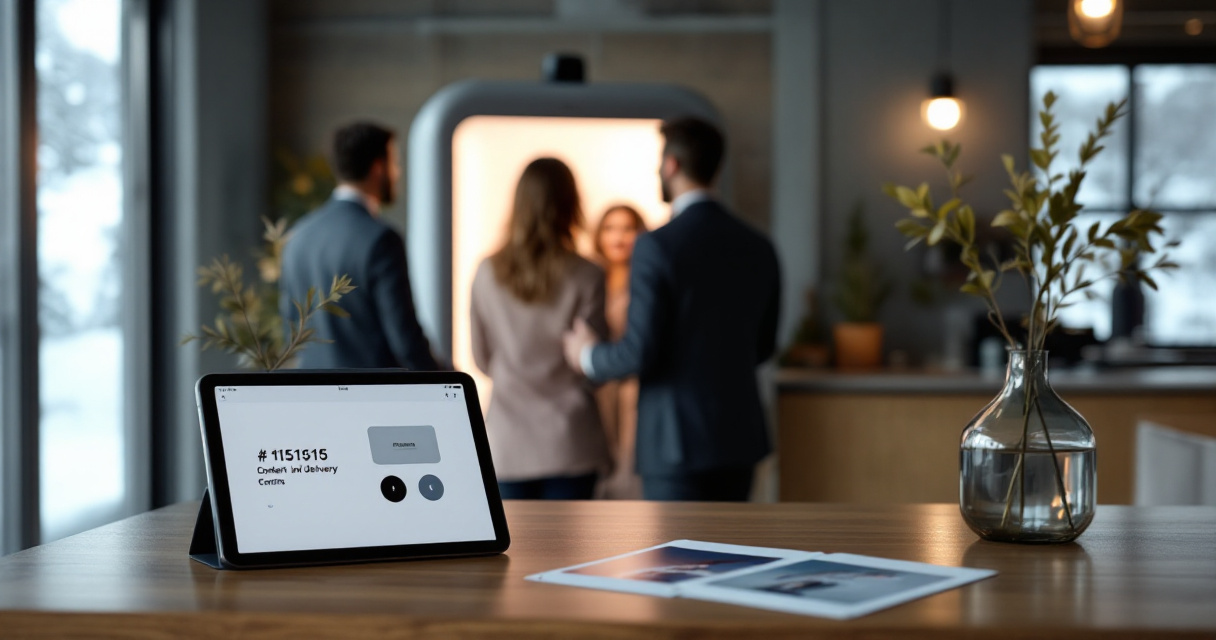
The main difference from a basic booth is intent. A standard booth creates a keepsake. An AI booth can create a branded asset, collect opt-ins, and give marketing teams a warm reason to follow up. For a broader primer, see this guide to what an AI photobooth is.
The best lead capture flow feels like photo delivery, not a form disguised as entertainment.
The 2026 guest process from scan to CRM
A clean flow usually has five steps:
- Guest scans a QR code or starts at the booth screen.
- Guest sees a privacy notice and chooses consent options.
- Guest enters minimal details, such as name and email.
- AI generates the branded portrait or themed image.
- The asset is delivered and, if allowed, synced to sales or marketing tools.
Research on technostress by Korosec-Serfaty, Riedl, and Sénécal (2022) examined how stress affects digital behavior, which supports a simple event lesson: reduce friction when people are busy, distracted, or in a queue (Frontiers in Neuroscience).
When should you ask guests for data?
Ask for data at the point where the guest understands the value exchange: before the photo for strict CRM qualification, or after the preview for higher participation. The right timing depends on event format, queue pressure, and how sensitive the audience is to forms.
For conferences and trade shows, pre-photo capture can qualify visitors before staff spend time on follow-up. For galas, product launches, and internal events, post-photo capture often feels more natural because guests have already seen the creative result.
Teams building visual activations should align the form with brand experience, not just database goals. The same principle applies to branding through event photography and branded outputs such as custom photo products for events.
Data request timing compared
| Capture moment | Best for | Main trade-off |
|---|---|---|
| Before the photo | Trade shows, gated demos, sales-led events | Stronger qualification, but more drop-off risk |
| After photo preview | Brand launches, galas, employee events | Higher guest comfort, but lighter lead data |
| At delivery by email or SMS | High-volume activations | Smooth experience, but needs clear consent language |
| Post-event follow-up form | VIP events, account-based marketing | Better context, but lower immediacy |
A practical form asks only for data you will use: name, business email, company, role, consent status, preferred follow-up topic, and photo delivery channel.
How do privacy, trust, and AI expectations shape conversions?
Privacy and trust shape conversions because guests are more likely to share details when they know why data is collected, how the AI image is generated, and what communication they are agreeing to receive. In 2026, vague consent language is a conversion risk, not just a legal risk.
Keep the notice short, visible, and specific. Say whether images are stored, how long they are kept, whether contact details go to a CRM, and whether guests can request deletion. Avoid bundling photo delivery consent with marketing consent.
A 2024 study by Vadruccio, Pantano, and Tumino examined how retail technologies influence physical space production, a useful reminder for event teams: technology changes how people move, wait, interact, and trust branded environments (International Journal of Retail & Distribution Management).
Trust checklist for event marketers
Use this checklist before launch:
- Show the privacy notice before data entry.
- Separate photo delivery consent from marketing opt-in.
- Mark required and optional fields clearly.
- Use QR codes that open on mobile without app downloads.
- Test the flow on event Wi-Fi and mobile data.
- Sync only approved fields into your CRM.
- Give staff a one-sentence explanation of the AI process.
Swissmoments teams can also pair booth data with wider event coverage when brands need both lead capture and campaign-ready media. For planning support, review conference photography best practices or compare capture value with corporate event media ROI measurement. You can also visit swissmoments.ch when planning a Swiss corporate activation.
Conclusion
AI photobooth lead capture is not about collecting the most fields; it is about earning a useful opt-in through a memorable branded moment. Start with one clear goal, map the guest flow, write plain consent copy, and test delivery before doors open. If you want a practical setup for your next event, speak with Swissmoments and bring your CRM, creative, and privacy teams into the plan early.
