

Event teams are asking what is an ai photobooth because guest photos are no longer just souvenirs, they are branded content assets. AI photobooth: an event photo experience that captures a guest image, applies artificial intelligence effects, and delivers a customized image instantly. Swissmoments helps corporate teams turn that interaction into usable event media.
What is an AI photobooth?
An AI photobooth is a photo activation that uses artificial intelligence to transform a guest's captured image into a personalized portrait, branded scene, themed illustration, or campaign-ready visual. Unlike a classic booth, it can change style, setting, colors, and creative treatment while keeping delivery fast enough for live events.
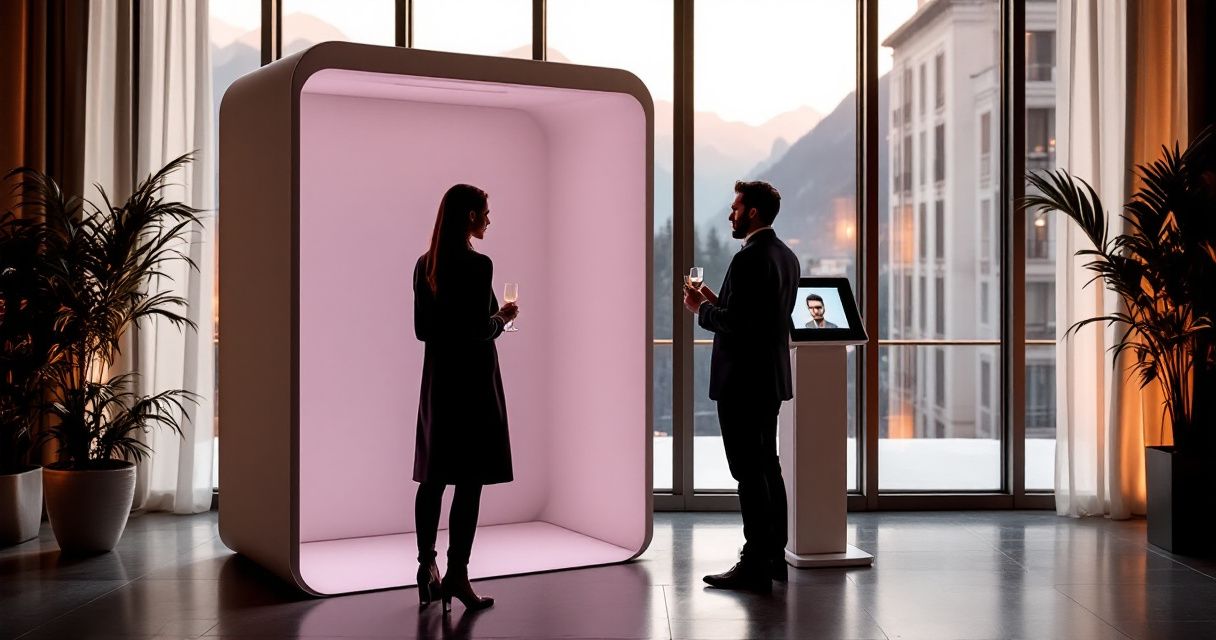
The core idea is simple: a camera captures the guest, software detects the subject, and generative or computer-vision tools create a new output. Wikipedia's Pixel Camera entry notes how modern camera applications combine capture software with advanced imaging functions, which reflects the broader shift from basic photography to software-assisted image creation.
Key insight: an AI photobooth is not only entertainment, it is a controlled way to create branded, shareable event content at scale.
AI photobooth compared with other event photo formats
| Format | Best for | Main limitation |
|---|---|---|
| Classic photobooth | Quick guest snapshots and prints | Limited personalization |
| AI photobooth | Branded portraits, themed concepts, social sharing | Needs clear creative rules |
| Roaming photographer | Candid storytelling and VIP coverage | Less interactive for guests |
| Headshot station | Professional portraits | Narrower use case |
For wider event coverage, teams often combine an AI booth with corporate event photography in Switzerland or use it beside planned conference photography best practices.
How does an AI photobooth work at an event?
An AI photobooth works by capturing a guest image, processing it through AI software, applying a selected creative style, and sending the final image by QR code, email, SMS, or gallery link. In 2026, most event setups focus on speed, brand control, consent, and easy social sharing.
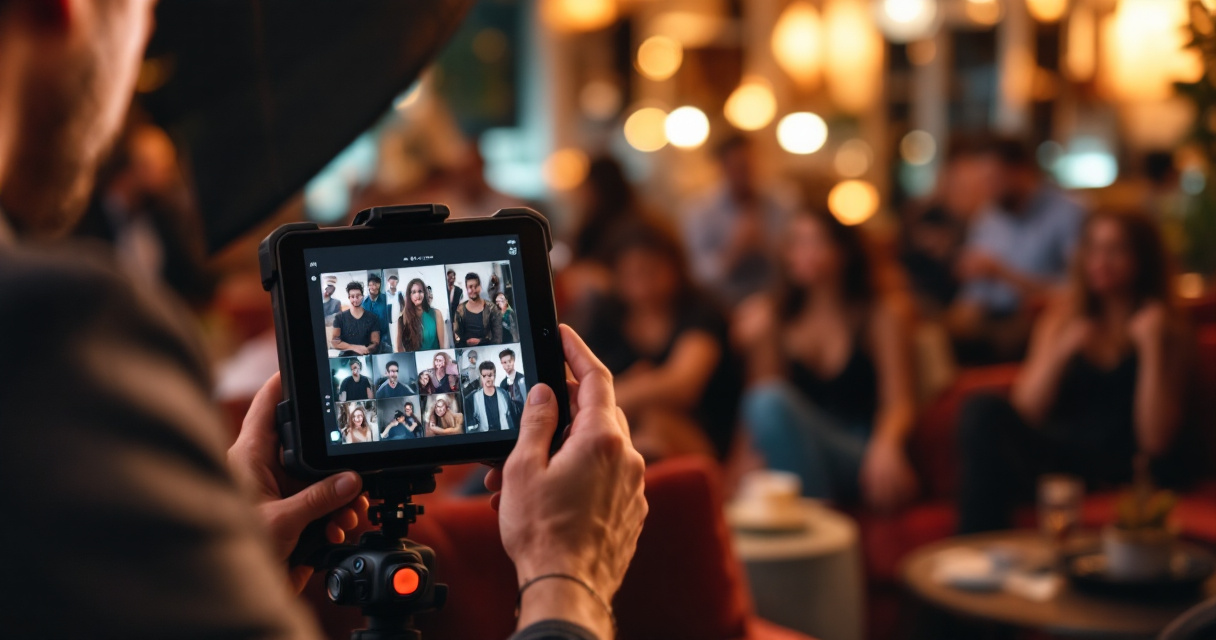
Typical workflow:
- Guest chooses a theme or prompt.
- Camera captures the portrait.
- Software separates the subject from the background.
- AI applies a branded scene, illustration style, or campaign concept.
- The final image is reviewed, delivered, and optionally shared.
Research on explainable AI, such as the 2022 Mathematics paper on Deep Learning XAI for Bus Passenger Forecasting, shows why transparency matters when automated systems influence outputs. For event teams, that means prompts, moderation, and brand templates should be planned before doors open.
What event teams should prepare before using one
- Brand assets: logos, colors, campaign lines, and visual rules.
- Creative styles: executive portrait, futuristic, cinematic, gala, product-launch, or seasonal theme.
- Guest consent flow: clear permission for image creation and sharing.
- Delivery channel: QR, email, on-screen gallery, or social-ready download.
- Measurement plan: scans, shares, leads, or gallery engagement.
A booth performs best when it supports a larger event content strategy for marketing teams, not when it is treated as a standalone gadget.
When should brands use an AI photobooth, and when should they avoid one?
Brands should use an AI photobooth when they want high guest participation, fast branded content, and a memorable visual hook for conferences, galas, product launches, employee events, and promotional activations. It is especially useful when the output can feed social media, internal communications, or post-event campaigns.
Strong use cases include:
- Product launches with themed campaign visuals.
- Conferences that need interactive sponsor engagement.
- Galas where guests expect a premium takeaway.
- Internal events where teams want fun but brand-safe portraits.
- Exhibitions where lead capture and sharing matter.
Avoid one when privacy approval is unclear, internet access is unreliable, guest flow is too tight, or the audience expects documentary coverage rather than creative transformation. A 2022 Frontiers in Neuroscience study on technostress and behavioral responses is a useful reminder that technology should reduce friction, not add pressure.
How it fits into a complete media plan
An AI booth should complement photographers, videographers, and social media planning. Use it for interaction and shareable portraits, then rely on professional coverage for speakers, sponsors, networking, atmosphere, and key moments.
For campaign value, connect booth outputs to how brands use event photos for social media marketing and decide early whether your priority is stills, motion, or both using this guide to photography vs videography for corporate events.
Conclusion
what is an ai photobooth in practical terms? It is a fast, interactive content station that turns guest portraits into branded, AI-enhanced visuals for live events. If you are planning a launch, conference, gala, or internal activation, visit swissmoments.ch and ask Swissmoments how the concept can fit your audience, brand rules, and media plan.
