

One missed speaker reaction or stage cue can weaken an otherwise expensive event video. Multi camera event video production solves that by recording the same moment from several angles at once, a method Wikipedia defines as a production approach using multiple cameras simultaneously. For brands building event content in 2026, pairing that setup with AI Photobooths in Events and a clear event videography strategy for corporate events creates more usable footage before, during, and after the show.
Why multicam matters more for corporate events now
Corporate events rarely give you a second take. A keynote, panel, award handoff, or product reveal happens once, so a multicam setup reduces coverage risk while giving editors more options for pacing, audience cutaways, and branded recap edits.
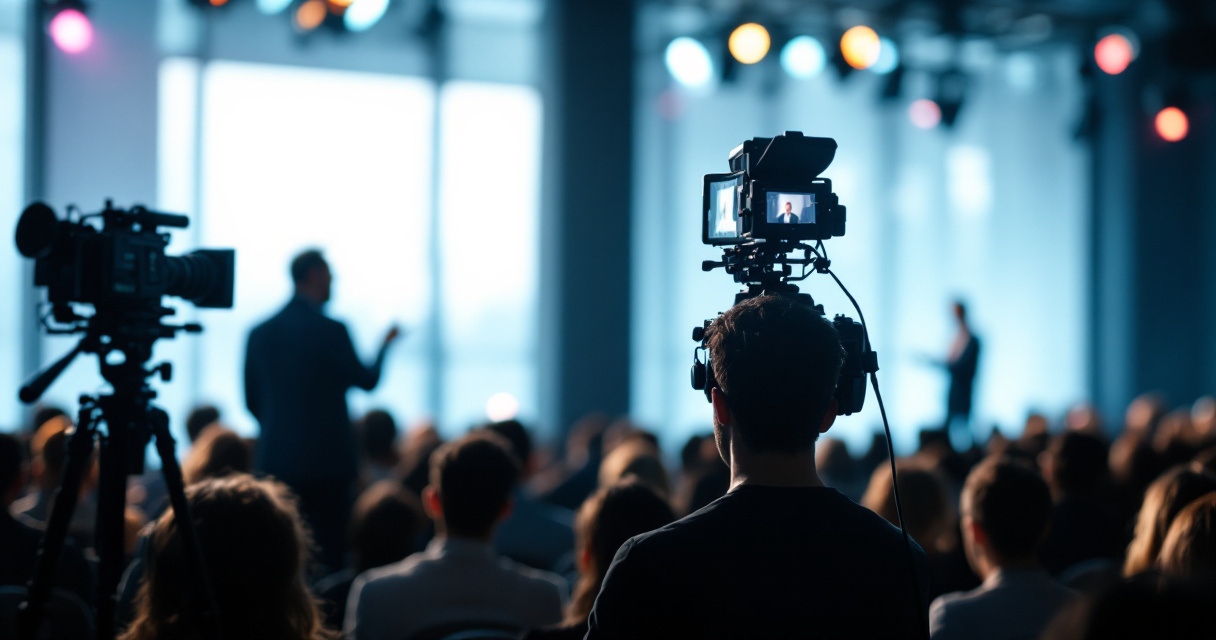
Multi-camera production is not new, but its value has grown as brands need one event to feed livestream clips, internal comms, social edits, and post-event marketing. That aligns with demand for repurposed corporate video content for marketing rather than a single long recap.
Key takeaway: more cameras do not just add angles, they protect key moments and expand content output.
### A practical camera plan for cleaner coverage
A simple setup often works best:
- Wide master camera for stage continuity
- Tight speaker camera for facial detail
- Audience or side-angle camera for reactions and movement
- Optional roaming unit for networking, branding, or sponsor shots
Best-use comparison
| Camera role | Primary job | Most useful for |
|---|---|---|
| Wide master | Covers the full stage | Safe edit base, livestream backup |
| Tight angle | Captures speaker detail | Keynotes, fireside chats |
| Side or audience angle | Adds reactions and depth | Panels, applause, awards |
| Roaming camera | Captures atmosphere | Social clips, highlight reels |
For teams planning a larger production, working with an event media production agency in Switzerland helps match crew size to venue complexity.
How to plan a multicam workflow that saves time in post
The biggest mistake is thinking multicam starts on shoot day. It starts in pre-production, with camera positions, audio routing, stage lighting checks, and a shot list tied to your run-of-show.
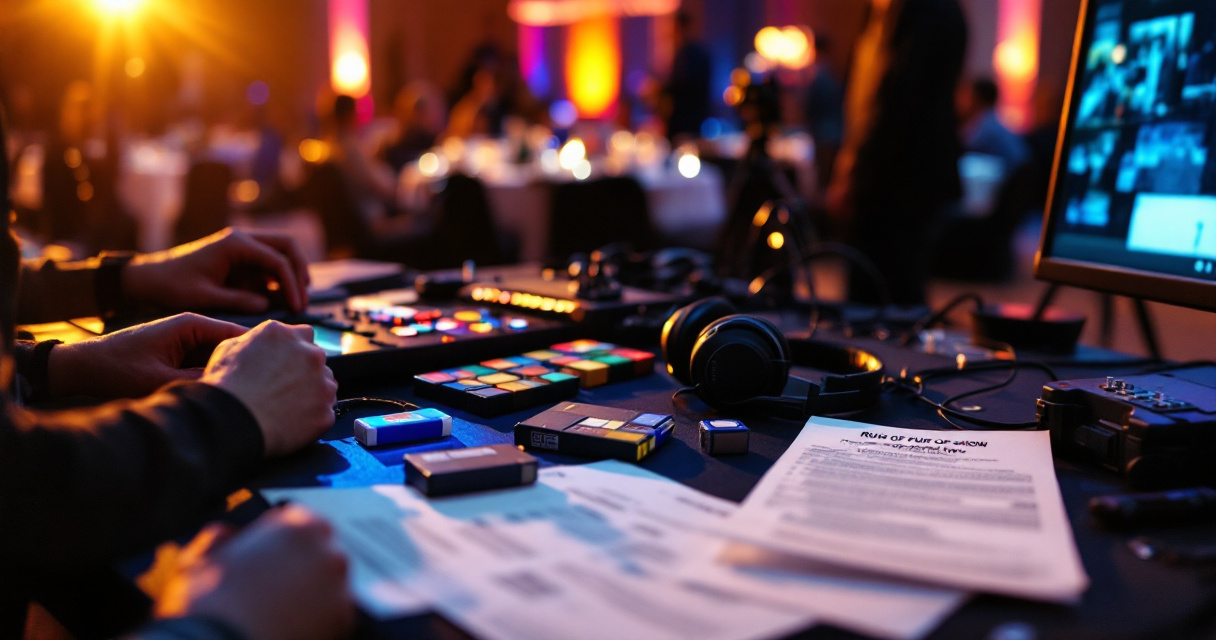
A shared plan matters even more when video has to work alongside stills, social capture, and guest activations. For example, a team documenting backstage prep can combine multicam stage coverage with a behind-the-scenes corporate event shoot and branded guest engagement using AI Photobooths in Events.
Good multicam production is really good coordination: cameras, audio, timing, and edit goals all need one plan.
### Workflow checks that prevent expensive mistakes
Use this checklist before doors open:
- Lock timecode or use a reliable sync method
- Record separate, clean audio from the venue mixer
- Confirm sightlines so cameras do not block guests
- Match frame rates and core color settings
- Build naming conventions for fast ingest
Research on future wireless systems points to why live production workflows will keep improving. Fan Liu, Yuanhao Cui, and Christos Masouros (2022) examined integrated sensing and communications for 6G, while Cheng-Xiang Wang, Xiaohu You, and Xiqi Gao (2023) reviewed 6G requirements and testbeds. For event teams, that signals lower-latency, more connected production environments ahead, even if most 2026 shoots still rely on proven wired backbones.
What brands should expect from multi camera event video production in 2026 and beyond
Buyers now expect event video to do more than document a room. They want content that can be cut into sales assets, employer-brand pieces, recap reels, and hybrid-event distribution. That makes shot selection more strategic: not every angle is for the main film, some are captured specifically for reuse.
Another shift is immersive audience design. Sangmin Park and Young-Gab Kim (2022) reviewed metaverse applications and challenges, a reminder that event video is moving toward more interactive formats, not just passive playback.
### Where smart event teams are investing next
Three trends stand out for 2026 planning:
- Content modularity: shoot for many edits, not one final video
- Hybrid audience capture: frame both in-room energy and remote viewing needs
- Experience layering: combine video with photography, guest data capture, and branded touchpoints
That last point matters. A strong event package can combine multicam video, conference photography best practices, and guest engagement through the AI Photobooths in Events platform. If your event also needs visual consistency across stills, review approaches to branding through event photography.
In 2027, expect more remote camera control, better wireless monitoring, and tighter links between live capture and instant content delivery.
Conclusion
Multi camera event video production gives marketing and event teams a safer, smarter way to capture moments that cannot be repeated. If you want footage that works across livestreams, recap edits, and brand campaigns, start with a clear camera map and talk to AI Photobooths in Events through the Swiss Moments contact page to plan a production system that fits your next event.
