


Corporate marketing teams face a crowded digital environment where static content struggles to hold attention. Video changes that equation. Modern corporate video content allows brands to explain complex ideas, demonstrate products, and create emotional connection in seconds. In digital marketing, which promotes products and services through online technologies and media platforms, video has become one of the most versatile assets companies can produce. For organizations running conferences, product launches, or branded events, visual storytelling becomes even more powerful when real moments are captured on site. Agencies such as AI Photobooths in Events combine live experiences with instantly shareable media, turning event participation into marketing content that continues working long after the event ends.
What Corporate Video Content Actually Means in Modern Marketing
Corporate video content refers to video created by or for a company to communicate with audiences such as customers, employees, investors, or partners. Traditionally these were internal films or promotional pieces. Today they appear across websites, social platforms, product pages, and event campaigns.
Corporate films are typically non-advertising video productions commissioned by a company, often focusing on storytelling, product explanation, or brand positioning. The underlying technology behind them is digital video, which stores moving visual images as encoded digital data, making it easy to distribute across online platforms.
The difference in 2026 is not the format but the role video plays across the entire marketing funnel.
- Awareness: brand story videos and event highlights
- Consideration: product demos, explainer videos, and case studies
- Conversion: testimonial clips and product walkthroughs
- Loyalty: community content, behind-the-scenes footage, and culture videos
Corporate video has moved from a single promotional film to a continuous content pipeline. Marketing teams now repurpose one production into dozens of assets: short clips for social platforms, vertical videos for mobile feeds, highlight reels for events, and longer storytelling pieces for websites.
Corporate video content works best when a single production generates multiple short-form assets across platforms rather than one standalone film.
Where Corporate Video Appears in the Customer process
| Marketing Stage | Video Type | Goal |
|---|---|---|
| Awareness | Brand story, event highlight video | Introduce the brand and mission |
| Consideration | Product demo, explainer video | Show how the solution works |
| Decision | Testimonials, case studies | Build credibility and trust |
| Retention | Community stories, culture videos | Strengthen brand relationship |
This structured approach helps marketing teams justify production budgets because each video serves multiple marketing objectives rather than one campaign.
High-Impact Corporate Video Formats Brands Use Today
Many companies assume corporate video means a polished brand film. In reality, the most effective strategies mix multiple formats that serve different marketing goals.
Brand Story and Mission Videos
A brand story video communicates why a company exists and what it stands for. Instead of listing features, these videos highlight mission, culture, and values.
Marketing teams often use them for:
- website homepage videos
- investor presentations
- recruiting campaigns
- conference openings
Strong storytelling is increasingly supported by new production tools. Research examining generative AI technologies highlights how machine learning systems can assist with content generation, editing, and creative workflows in digital media production (Dwivedi, Kshetri, Hughes, 2023). While human storytelling remains essential, automation speeds up editing, captioning, and distribution.
Product Demonstration and Explainer Videos
Product demos are often the most practical corporate videos. Instead of lengthy documentation, companies show how a product works in real conditions.
Effective demo videos typically include:
- The problem customers face
- A clear product walkthrough
- Real-life usage examples
- A measurable benefit or result
These videos perform well on landing pages and during product launches because they reduce friction for potential buyers.
Testimonial and Case Study Videos
Trust drives purchasing decisions. Case study videos show real customers explaining how a solution solved a problem.
Key elements include:
- the customer challenge
- implementation process
- measurable outcomes
- emotional reaction to the solution
When filmed during conferences or client visits, testimonial videos feel more authentic than staged studio interviews.
Event-Driven Corporate Video: Turning Conferences Into Marketing Assets
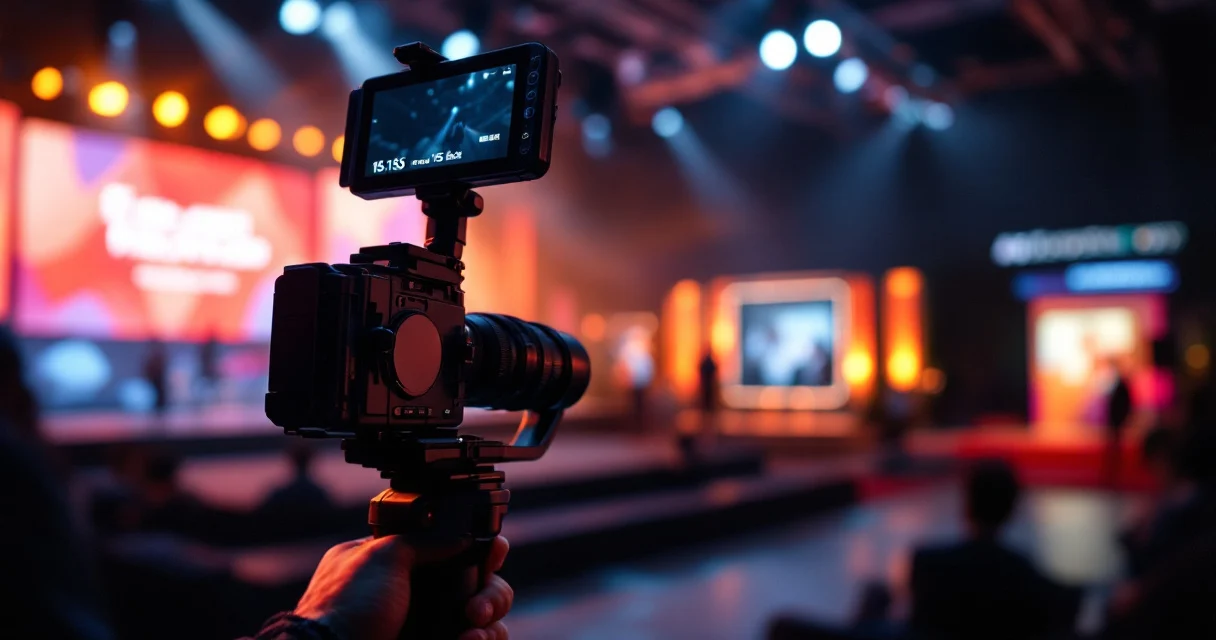
Corporate events produce some of the most authentic marketing content available to brands. Conferences, product launches, and corporate gatherings generate real interactions, spontaneous reactions, and live demonstrations.
Instead of treating events as one-day experiences, modern marketing teams treat them as content engines.
Content Opportunities Hidden Inside Events
A single corporate event can produce dozens of usable videos:
- keynote speech highlights
- panel discussion clips
- attendee reactions
- product demo recordings
- behind-the-scenes footage
This content often performs better on social media because it captures real energy rather than staged messaging.
Interactive Media Experiences That Generate Shareable Video
Experiential content has become a major part of corporate events. Interactive installations encourage attendees to participate rather than passively watch presentations.
One example is the use of AI-powered photo and video activations. Solutions such as the AI Photobooths in Events platform allow guests to create personalized branded media in seconds. Participants receive shareable content while brands gain authentic marketing material.
These activations create several advantages:
- user-generated promotional content
- increased social media visibility
- branded visuals tied directly to the event
- higher attendee engagement
For marketing teams, the value extends beyond entertainment. Every captured moment becomes reusable marketing footage for post-event campaigns.
Event-generated video content often produces the most authentic brand storytelling because it captures real reactions rather than scripted messaging.
Event Video Assets Worth Capturing
| Content Type | Where It Works Best | Marketing Value |
|---|---|---|
| Highlight reels | Social media & recap pages | Builds excitement around the event |
| Speaker clips | LinkedIn & thought leadership | Positions executives as experts |
| Attendee reactions | Short social videos | Builds social proof |
| Interactive booth content | Instagram, TikTok, event pages | Encourages sharing |
When planned in advance, event video production can fuel marketing campaigns for months.
Production Strategy: How Marketing Teams Plan Corporate Video
The biggest mistake companies make with corporate video is producing content without a clear distribution plan. Successful teams design videos around specific marketing channels.

Start With Distribution, Not Production
Before filming begins, marketing teams should answer three questions:
- Where will the video be published?
- Which audience segment is it targeting?
- How many derivative clips will be created?
This approach prevents expensive productions that produce only one usable video.
Corporate Video Planning Framework
- Define the campaign goal, brand awareness, lead generation, or recruitment
- Choose the primary video format
- Plan supporting short-form clips
- Schedule distribution across platforms
- Measure engagement and reuse top-performing clips
Advances in machine learning and deep learning are also influencing video workflows. Research on machine learning systems explains how automated analysis can classify and process large media datasets, helping companies manage content libraries and optimize distribution (Janiesch, Zschech, Heinrich, 2021).
Corporate Video Production Checklist
| Step | Key Question | Outcome |
|---|---|---|
| Strategy | What marketing goal does this video serve? | Clear campaign purpose |
| Concept | What story will capture attention quickly? | Engaging narrative |
| Production | Which locations, speakers, and visuals are needed? | Organized filming |
| Distribution | Which platforms will host the video? | Wider reach |
| Repurposing | How many short clips can be created? | Extended content lifespan |
Companies that treat video as a system instead of a single project see significantly stronger long-term results.
What Corporate Video Marketing May Look Like by 2027
Corporate video is moving toward more immersive and interactive formats. Emerging technologies suggest several shifts in how brands communicate visually.
Research examining the development of virtual environments and immersive digital systems highlights how connected virtual spaces could support new forms of interaction between users and digital media (Park & Kim, 2022). For marketing teams, this suggests a future where video becomes interactive rather than purely passive.
Trends Already Appearing in Corporate Content
- interactive event media experiences
- personalized video generated from user data
- AI-assisted editing and content production
- immersive environments tied to live events
Events will likely play an even larger role in this shift because they provide real-world environments that blend physical and digital content.
Interactive installations, immersive booths, and personalized media creation are already appearing at conferences and product launches. Services like AI Photobooths in Events show how real-time media creation can turn event attendees into brand advocates.
Preparing a Future-Ready Video Strategy
Marketing teams preparing for the next wave of corporate video should focus on three priorities:
- Capture more real moments during live events
- Design video for multiple platforms from the start
- Combine experiential content with digital distribution
Brands that build systems around continuous visual storytelling will adapt far more easily as video formats evolve.
Conclusion
Corporate video content has evolved from occasional promotional films into a central marketing asset. Today it supports brand storytelling, product education, thought leadership, and post-event engagement. The most effective strategies treat video as an ongoing content engine rather than a single production.
Events provide one of the richest sources of authentic video material. When companies capture real interactions, presentations, and attendee experiences, they create marketing assets that continue delivering value long after the event ends. Interactive media tools, including AI Photobooths in Events, add another layer by turning participants into content creators while strengthening brand visibility.
If your organization runs conferences, product launches, or branded corporate gatherings, consider designing the event itself as a video production opportunity. Explore how experiential visual solutions from AI Photobooths in Events can turn live engagement into powerful marketing content that fuels campaigns across social media, websites, and future promotions.
