


The most powerful marketing photos from corporate events rarely come from the stage. They come from the moments nobody sees, the preparation, collaboration, and spontaneous reactions happening behind the scenes. A behind‑the‑scenes corporate event shoot captures these authentic interactions and turns them into visual assets that brands can use long after the event ends. Modern event coverage increasingly combines documentary-style photography, video storytelling, and interactive experiences such as AI Photobooths in Events, giving companies both polished media and engaging content generated during the event itself. Understanding how these shoots work helps marketing teams plan better events and extract far more value from every activation.
What a Behind-the-Scenes Corporate Event Shoot Actually Captures
Behind-the-scenes (BTS) coverage focuses on the human and operational side of an event rather than the staged highlights. Instead of only photographing keynote speakers or award presentations, BTS photographers document the process: team coordination, production setups, brand installations, and attendee interactions.
This approach produces storytelling material that shows how an event unfolds. Corporate marketing teams use this content for social media, employer branding, recruitment campaigns, and post‑event promotion.
BTS photography transforms an event from a single-day experience into a long‑term marketing asset library.
Competitor analyses of corporate shoot workflows often focus on lighting and staging, but the real value of BTS coverage lies in authenticity. Audiences tend to respond better to real interactions than posed promotional images.
Common Moments Captured During BTS Coverage
- Stage preparation and technical setup
- Speaker rehearsals and backstage coordination
- Event staff collaboration and problem solving
- Networking conversations between attendees
- Product demonstrations and brand activations
- Media crews, photographers, and production teams at work
Many events also include interactive activations. Experiences such as AI Photobooths in Events generate instant branded images for attendees while photographers document the engagement around the booth itself. These layered content moments create multiple marketing assets from a single activity.
Pre‑Production: Planning the BTS Coverage Before the Event Starts
The success of a behind‑the‑scenes shoot depends heavily on planning. Corporate events are fast moving environments, so photographers and videographers must know the schedule, key moments, and brand priorities before the first guest arrives.
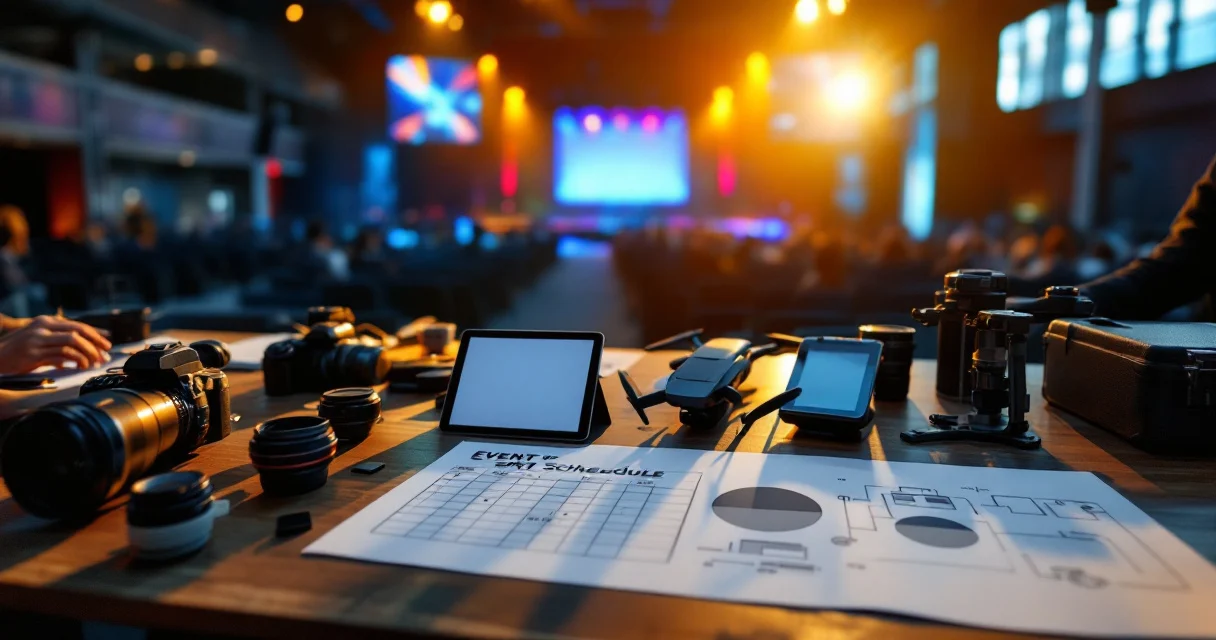
Production teams typically coordinate closely with event managers and marketing departments to define the shot list and storytelling goals.
Core Planning Steps for Event BTS Production
- Define content goals: internal documentation, social media, recruitment marketing, or brand storytelling.
- Map the event timeline: identify rehearsals, setup periods, VIP arrivals, and high‑energy moments.
- Plan camera coverage: determine whether the shoot includes photography, video, or both.
- Identify brand activations: booths, installations, and product launches that need documentation.
- Prepare permissions and logistics: access badges, backstage entry, and lighting considerations.
Corporate event planners often underestimate how much coordination happens before cameras appear. A well‑planned production avoids disruption and captures moments that might otherwise be missed.
Typical Roles in a Corporate Event Shoot
| Role | Responsibility |
|---|---|
| Event Photographer | Captures candid BTS images and key event moments |
| Videographer | Films cinematic footage for recap videos |
| Lighting Technician | Ensures usable lighting in challenging venues |
| Event Producer | Coordinates timing, access, and priorities |
| Content Editor | Prepares images and video for marketing use |
Large conferences or product launches may deploy several photographers covering different areas simultaneously. This ensures both staged highlights and unscripted behind‑the‑scenes moments are documented.
During the Event: How Professionals Capture Authentic Corporate Moments
Once the event begins, the challenge shifts from planning to observation. Skilled BTS photographers move quietly through the venue, capturing interactions without interrupting them.
Corporate environments often involve tight schedules, shifting lighting conditions, and crowded spaces. Photographers must adapt quickly while keeping brand aesthetics consistent.
Techniques Used by BTS Event Photographers
- Documentary shooting style that prioritizes real interactions over posed images
- Long‑lens photography to capture candid moments without intruding
- Fast lighting adjustments for changing stage and venue conditions
- Rapid image selection for quick social media sharing
These techniques mirror approaches used in film and production environments where BTS photography documents the creative process itself.
Content Opportunities During Corporate Events
| Moment | Marketing Value |
|---|---|
| Speaker preparation backstage | Shows authenticity and leadership personality |
| Team collaboration | Strengthens employer branding |
| Product setup or demos | Highlights new idea and craftsmanship |
| Attendee reactions | Demonstrates event impact |
| Interactive activations | Creates shareable social content |
Interactive installations often produce the most engaging visuals. When attendees use AI Photobooths in Events, for example, the booth itself becomes a storytelling element. Guests experiment with AI-generated images while photographers capture reactions, group moments, and branded outputs that spread quickly across social platforms.
Post‑Production: Turning BTS Footage Into Marketing Assets
A corporate event shoot does not end when the venue closes. Editing and content packaging determine how valuable the material becomes for marketing teams.
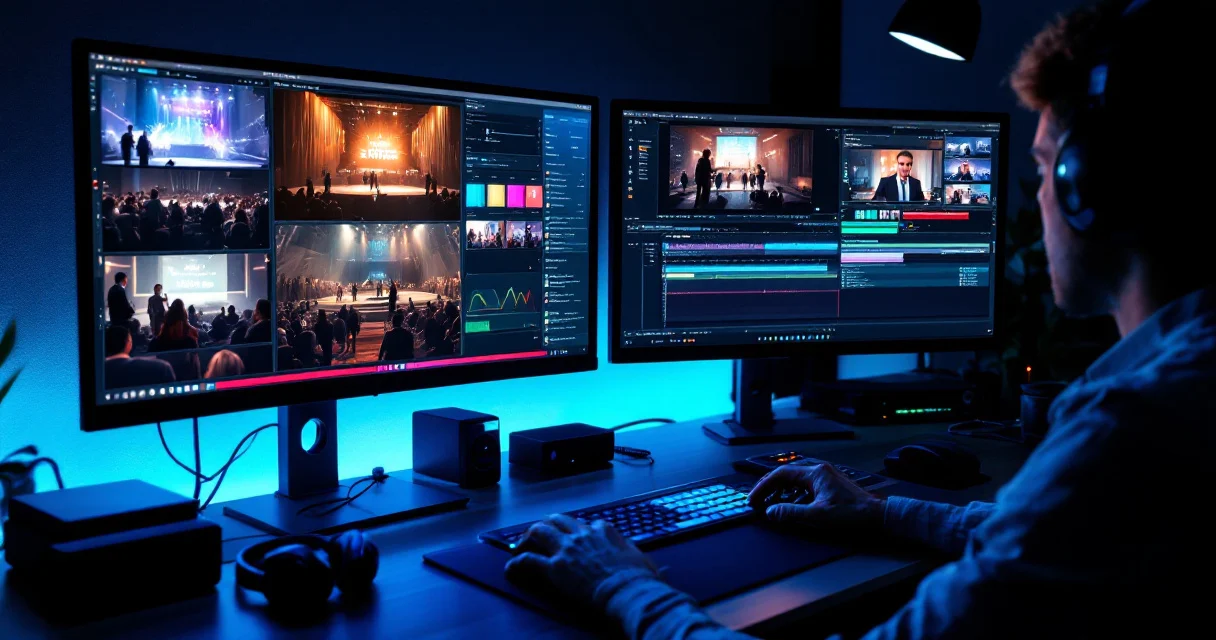
Post‑production teams sort hundreds or thousands of images, selecting those that best represent the event narrative and brand tone. Video editors also assemble highlight reels, short social clips, and internal recap videos.
The Corporate Event Media Workflow
- Image curation: selecting the strongest photos from large batches.
- Color correction and retouching: maintaining brand consistency.
- Video editing: creating highlight videos and short promotional clips.
- Content formatting: optimizing for websites, LinkedIn, Instagram, and press releases.
- Media library delivery: organizing files for long‑term brand use.
Example Content Produced After a BTS Event Shoot
| Content Type | Typical Use |
|---|---|
| Event recap video | Post‑event marketing and future promotion |
| Social media photo sets | Real‑time engagement and brand awareness |
| Internal culture videos | Employer branding and recruitment |
| Press images | Media coverage and announcements |
| Website gallery | Long‑term brand storytelling |
Many companies now integrate automated content experiences into this workflow. When attendees interact with the AI Photobooths in Events platform, they instantly receive branded images while the marketing team gains additional user‑generated visuals for post‑event campaigns.
Why Behind-the-Scenes Event Content Is Growing in 2026
Corporate marketing strategies increasingly rely on authentic visual storytelling rather than staged promotional imagery. BTS coverage fits this shift perfectly.
Modern audiences expect transparency. Seeing the preparation, teamwork, and technical creativity behind an event builds trust in the brand organizing it.
Research trends in technology and digital systems also highlight the growing influence of AI in operational environments. A 2023 review of artificial intelligence applications in infrastructure and city systems examined how AI can improve automation and decision‑making in complex environments such as large operational networks, a concept that increasingly applies to event technology as well (Artificial intelligence for waste management in smart cities: a review).
Corporate events are becoming similar systems: multiple technologies, teams, and real‑time interactions happening simultaneously.
Trends Shaping Event BTS Content
- Hybrid photo and video coverage rather than separate teams
- Real‑time social media content during events
- AI‑driven interactive experiences for attendees
- Short‑form video clips for LinkedIn and Instagram
- Event documentation for employer branding
What to Expect by 2027
| Trend | Impact on Corporate Events |
|---|---|
| AI‑generated visuals | Personalized attendee content |
| Real‑time editing tools | Faster post‑event publishing |
| Data‑driven content strategy | Clear ROI from event media |
| Interactive installations | Stronger audience participation |
Behind‑the‑scenes coverage will likely become standard for conferences, product launches, and brand activations because it captures the story around the event, not just the event itself.
Conclusion
Corporate events represent major investments in marketing, networking, and brand visibility. Capturing what happens behind the scenes ensures that investment continues generating value long after the venue lights turn off. From documenting preparation and teamwork to recording authentic attendee reactions, BTS content turns one day of activity into months of marketing material. Interactive experiences such as AI Photobooths in Events add another layer by producing real‑time branded images while photographers capture the excitement around them. If your organization is planning a conference, product launch, or corporate celebration, consider integrating professional behind‑the‑scenes coverage into your event strategy so every moment contributes to your brand story.
Generated by EarlySEO.com
